

Refrigerated transport plays a critical role in Australia’s supply chain. From fresh food and pharmaceuticals to flowers and specialty products, temperature-controlled logistics help businesses maintain product quality, safety and compliance throughout transit. In major cities such as Sydney, Canberra and Melbourne, reliable refrigerated transport ensures that sensitive goods reach their destination in optimal condition.
Why Refrigerated Transport Matters
Many products can deteriorate quickly when exposed to incorrect temperatures. Refrigerated vehicles are designed to maintain consistent temperature ranges, protecting goods from spoilage, contamination and quality loss.
For businesses handling perishable or temperature-sensitive products, refrigerated transport is not just a convenience. It is an essential part of daily operations.
Food and Beverage Industry
The food and beverage sector is one of the largest users of refrigerated transport in Canberra and other regions. Fresh produce, dairy products, meat, seafood and frozen foods require strict temperature control during delivery.
Restaurants, supermarkets, wholesalers and food distributors across Sydney, Canberra and Melbourne depend on refrigerated transport to ensure products remain fresh and safe for consumption. Proper cold chain management also helps businesses comply with Australian food safety regulations.
Pharmaceutical and Healthcare Industry
The pharmaceutical industry relies heavily on temperature-controlled transport. Many medications, vaccines, biological products and medical supplies must be stored within specific temperature ranges to remain effective.
Refrigerated logistics providers help hospitals, pharmacies, medical centres and healthcare suppliers maintain product integrity throughout the supply chain. This is especially important for life-saving medicines and sensitive healthcare products.
Floral and Horticulture Industry
Flowers and plants are highly sensitive to temperature fluctuations. Excessive heat can significantly reduce their freshness, appearance and lifespan.
Florists, flower wholesalers and horticultural suppliers use refrigerated transport to preserve the quality of products during delivery. This is particularly valuable when transporting flowers between major metropolitan areas such as Melbourne, Canberra and Sydney.
Seafood Industry
Australia’s seafood industry depends on efficient cold transport systems to maintain freshness from harvest to market.
Fish, prawns, oysters and other seafood products must remain at controlled temperatures throughout transportation. Refrigerated vehicles help prevent spoilage while ensuring consumers receive fresh, high-quality seafood products.
Meat and Poultry Industry
The meat and poultry sector requires reliable refrigeration to maintain food safety standards and prevent bacterial growth.
Abattoirs, processing facilities, butchers and retailers rely on refrigerated transport to move products between suppliers, warehouses and retail locations. Consistent temperature management as part of refrigerated logistics in Sydney and other regions helps preserve quality while meeting strict industry regulations.
Dairy Industry
Milk, yoghurt, cheese and other dairy products are highly temperature sensitive. Even short periods of exposure to unsuitable temperatures can affect product quality and shelf life.
Refrigerated transport enables dairy manufacturers and distributors to maintain freshness from production facilities to supermarkets, cafes and consumers.
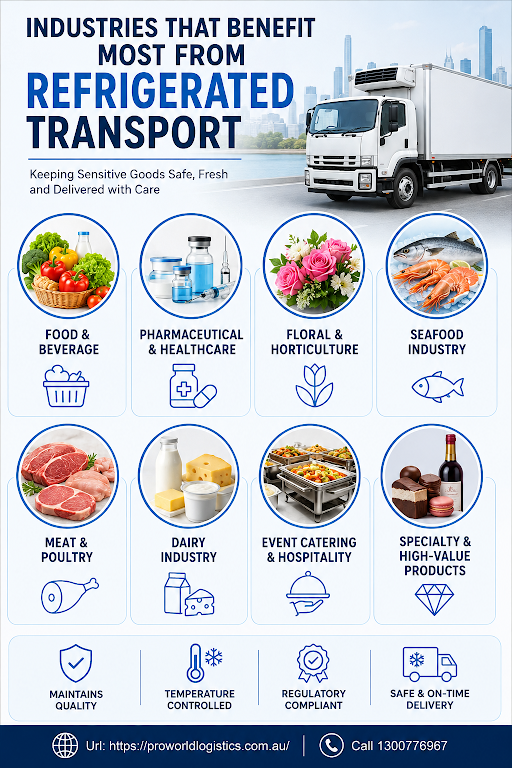
Event Catering and Hospitality
Event caterers and hospitality businesses frequently transport large volumes of perishable food and beverages. Refrigerated transport allows these businesses to safely move ingredients and prepared meals to venues while maintaining food quality.
Whether servicing corporate events in Canberra, weddings in Sydney or large functions in Melbourne, refrigerated logistics helps ensure food arrives fresh and ready to serve.
Specialty and High-Value Products
Certain specialty products such as gourmet foods, chocolates, premium beverages and laboratory samples also benefit from temperature-controlled transport.
These items often require stable environmental conditions to preserve their quality, appearance and performance during transit.
Choosing the Right Refrigerated Transport Provider
Businesses should select a logistics company with modern refrigerated vehicles, experienced drivers and strong cold chain management practices. Reliable tracking systems and flexible delivery options can further improve efficiency and product protection.
As demand for fresh and temperature-sensitive products continues to grow, refrigerated transport in Melbourne and other regions remains a vital service supporting various industries.
Keep Your Products Fresh From Pickup to Delivery
Whether you transport food, pharmaceuticals, flowers or specialty goods, professional refrigerated transport helps protect quality, reduce waste and maintain customer satisfaction. Partner with an experienced refrigerated logistics provider to ensure every delivery arrives in perfect condition.
Protect Your Temperature-Sensitive Deliveries
Need dependable refrigerated transport across Sydney, Canberra or Melbourne? Contact Proworld Logistics today for safe, compliant and efficient cold chain solutions tailored to your business. Call 1300776967 for a discussion or to get a quote.
Frequently Asked Questions about refrigerated transport
- Which industry uses refrigerated transport the most?
The food and beverage industry is the largest user of refrigerated transport due to the need to safely move fresh produce, meat, seafood, dairy and frozen products.
- Why is refrigerated transport important for pharmaceuticals?
Many medicines, vaccines and biological products require strict temperature control to maintain effectiveness, safety and regulatory compliance.
- Can refrigerated transport be used for flowers and plants?
Yes. Refrigerated transport helps flowers and plants maintain freshness, appearance and longevity during delivery and distribution.
- What temperature ranges can refrigerated transport maintain?
Depending on the cargo, refrigerated vehicles can operate in chilled, frozen or controlled ambient temperature ranges to suit specific products.
- How does refrigerated transport help businesses reduce waste?
By preventing spoilage and maintaining product quality, refrigerated transport minimises losses, improves shelf life and enhances customer satisfaction.
- What should businesses look for in a refrigerated transport provider?
Businesses should prioritise modern refrigerated fleets, temperature monitoring systems, compliance standards, delivery reliability and cold chain expertise.

