

The global meat industry relies on strict quality standards to ensure safety, freshness, and compliance across international markets. As demand for premium meat products continues to grow, exporters must maintain high standards throughout processing, packaging, storage, and transportation. Quality control not only protects consumers but also helps businesses build trust with international buyers and expand their market reach. Proworld Logistics supports efficient and reliable supply chain solutions that help businesses meet the requirements of modern meat export operations.
The Importance of Quality Standards in Meat Export
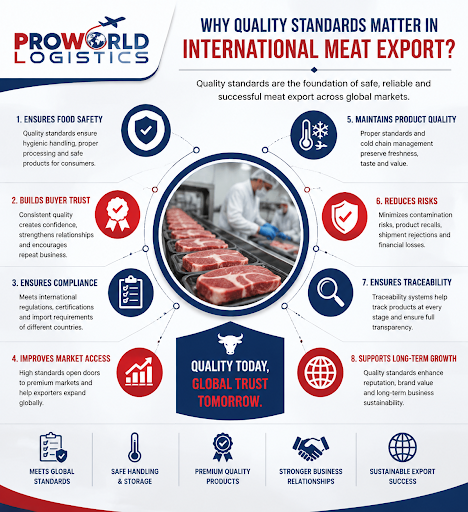
Quality standards are essential in international meat export because they ensure products meet the health, safety, and regulatory requirements of different countries. Every stage of the export process, from sourcing livestock to final delivery, must follow strict guidelines to maintain product quality.
International buyers expect meat products to be safe, properly handled, and traceable. Exporters that follow recognised standards can strengthen their reputation, reduce risks, and create long-term partnerships with global customers.
Ensuring Food Safety and Consumer Confidence
Food safety is one of the most important factors in the meat export industry. Proper hygiene practices, temperature control, and quality inspections help prevent contamination and maintain freshness during transportation.
Reliable logistics solutions play a major role in protecting meat quality from the processing facility to the destination market. Businesses involved in meat export in Melbourne must follow strict procedures to ensure products meet local and international expectations.
Similarly, companies managing meat export in Sydney need efficient supply chain systems that support safe handling, compliance, and timely delivery to overseas customers.
Meeting International Regulations and Certifications
Different countries have specific import requirements, certifications, and quality regulations for meat products. Exporters must understand these standards to avoid delays, rejected shipments, or financial losses.
Compliance with international requirements demonstrates professionalism and reliability. Proper documentation, inspection processes, and certified transportation methods help exporters successfully access competitive global markets.
The Role of Reliable Logistics in Maintaining Quality
Maintaining meat quality does not end after production. Transportation and storage conditions are equally important in international exports. Temperature-controlled environments, effective packaging, and dependable logistics management help preserve freshness and prevent product damage.
Proworld Logistics provides professional logistics support designed to help meat exporters manage complex supply chains. From careful handling to efficient international transportation, reliable logistics ensures products reach customers in excellent condition.
Building Strong Global Market Relationships
High-quality standards help meat exporters establish credibility with international buyers. Consistent quality, reliable deliveries, and compliance with regulations encourage repeat business and create opportunities for expansion into new markets.
Companies that prioritise quality are better positioned to compete globally and develop a strong presence in the international meat industry.
Quality standards are the foundation of successful international meat export in Melbourne. They ensure food safety, maintain product quality, support regulatory compliance, and build trust with global customers. By choosing reliable logistics solutions, exporters can improve efficiency and protect their reputation in competitive markets.
Book An Appointment Today
Partner with Proworld Logistics for dependable export support and professional logistics solutions tailored to your meat supply needs. Contact Proworld Logistics today to strengthen your international meat export journey.
Call us at 1300776967 or email us at jknoll@proworldlogistics.com.au for more information.
FAQ's About International Meat Export
- Why are quality standards important in international meat export?
Quality standards ensure that exported meat products meet safety, hygiene, and regulatory requirements across global markets. They help maintain product quality, protect consumers, and build trust with international buyers.
- How do quality standards improve meat export safety?
Quality standards support proper handling, processing, packaging, and transportation practices. These measures help prevent contamination, preserve freshness, and ensure meat products remain safe throughout the export journey.
- What certifications are required for international meat export?
International meat exporters may require various certifications related to food safety, quality assurance, animal welfare, and import regulations. Requirements vary depending on the destination country and market standards.
- How do quality standards affect customer trust in meat export businesses?
Consistent quality and compliance with international standards demonstrate reliability and professionalism. This helps exporters build stronger relationships with overseas buyers and encourages repeat business.
- What role does logistics play in maintaining meat export quality?
Logistics plays a crucial role by ensuring proper temperature control, safe handling, and timely delivery. Efficient cold chain management helps preserve meat quality from the supplier to the international customer.
- How do meat exporters ensure compliance with international regulations?
Meat exporters follow strict quality control procedures, maintain accurate documentation, conduct inspections, and work with experienced logistics partners to meet the requirements of different countries.
- Why is traceability important in international meat export?
Traceability allows exporters to track meat products throughout the supply chain, from sourcing and processing to delivery. It improves transparency, supports quality control, and helps address potential issues quickly.
- How can quality standards help meat exporters expand globally?
Meeting recognised quality standards allows exporters to access new international markets, improve their reputation, and compete effectively by offering safe and reliable products.
- What challenges can occur without proper quality standards in meat export?
Without proper standards, exporters may face shipment delays, rejected products, compliance issues, financial losses, and damage to their reputation among international customers.
- How can businesses improve quality management in international meat export?
Businesses can improve quality management by investing in certified processes, reliable supply chains, advanced storage solutions, and experienced logistics providers such as Proworld Logistics to ensure efficient global meat distribution.

