
Every international shipment begins with a quiet leap of faith, trusting that a product made on one side of the world will arrive intact on the other. Behind that trust sits a carefully coordinated process managed by a trusted logistics company, translating complex paperwork, customs regulations, and shipping routes into a journey that feels seamless to everyone but the people managing it. This is the story of how freight forwarding actually works, told through the eyes of a shipment that almost went wrong.
The Order That Started It All
It began with a purchase order, a manufacturer overseas, and a business eager to receive stock before a critical sales season. What seemed simple on paper- buy goods and receive them- quickly revealed layers of complexity. Documentation had to match exactly, customs codes needed precision, and a single missing form could delay an entire shipment for weeks. This is where freight forwarding quietly earns its value, absorbing complexity that would otherwise overwhelm a business unfamiliar with international trade.
Book a free consultation with Proworld Logistics to compare freight options across Canberra and Adelaide.
Choosing Between Speed And Space
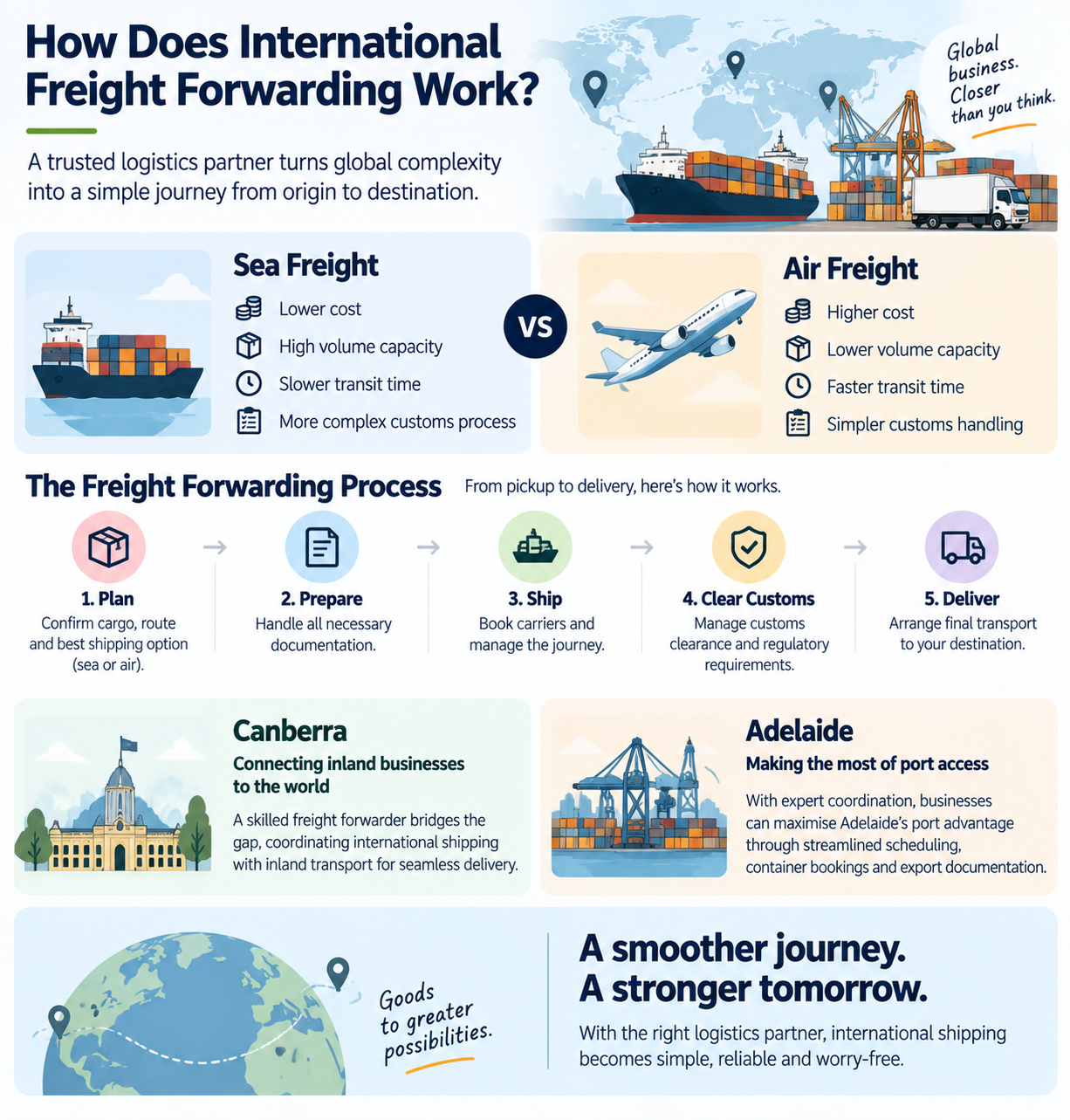
Every shipment faces the same early decision: sea or air. The chart above illustrates this tradeoff clearly. Sea freight offers strong cost efficiency and volume capacity but moves slowly and involves denser customs processes. Air freight moves fast and simplifies customs handling but costs significantly more and carries less volume. In this story, the shipment split: urgent items flew, while bulk stock sailed, a decision guided by international shipping expertise rather than guesswork.
The Paperwork Nobody Sees
Behind every successful shipment sits a mountain of documentation most customers never notice: commercial invoices, packing lists, certificates of origin, and customs declarations. A single inconsistency between these documents can trigger delays, fines, or shipment holds at the border. This is where a customs clearance specialist becomes essential, translating regulatory requirements into a process businesses can trust without needing to understand every legal nuance themselves.
Canberra’s Growing Trade Demands
As inland business hubs expanded their international reach, one Canberra based business faced a challenge many face today: limited direct port access despite growing import needs. Partnering with the best freight forwarder canberra businesses increasingly search for solved this gap entirely, coordinating inland transport alongside international shipping so goods arrived seamlessly despite the city’s landlocked position. What once seemed like a logistical disadvantage became simply another coordinated step in the process.
Adelaide’s Port Advantage, Maximised
Meanwhile, a business based in Adelaide held a natural advantage: proximity to major shipping routes, yet still faced delays without expert coordination. Working with the best freight forwarder Adelaide exporters trust unlocked that advantage fully, streamlining port scheduling, container bookings, and export documentation. What had been inconsistent shipping timelines became a predictable, repeatable process businesses could plan around with confidence.
Talk to Proworld Logistics today to simplify your next international shipment.
The Shipment That Arrived On Time
By the end of this story, the shipment that once felt uncertain arrived exactly when needed, stock lined shelves before the sales season began, and paperwork that once caused anxiety became routine. A dependable logistics company had quietly turned international complexity into a process businesses barely had to think about, proving that freight forwarding succeeds most when it stays invisible.
Take The Next Step With Proworld Logistics
Contact Proworld Logistics now to turn complex freight forwarding into a seamless process.
Frequently Asked Questions on Freight forwarder
- What does a freight forwarder actually do?
A freight forwarder coordinates shipping, documentation, and customs clearance on behalf of businesses.
- Is sea freight cheaper than air freight?
Yes, sea freight generally offers lower costs but takes significantly longer.
- How long does international freight forwarding take?
Timelines vary widely, from a few days by air to several weeks by sea.
- What documents are required for international shipping?
Common documents include commercial invoices, packing lists, and certificates of origin.
- Can freight forwarders handle customs clearance?
Yes, most forwarders manage customs documentation and compliance directly.
- Is freight forwarding necessary for small businesses?
Yes, even small shipments benefit from expert coordination to avoid costly delays.
- What happens if documentation is incorrect?
Incorrect documentation can lead to shipment delays, fines, or customs holds.
- Can inland cities access efficient international shipping?
Yes, freight forwarders coordinate inland transport alongside international routes.
- How is shipping cost calculated?
Cost depends on volume, weight, shipping mode, and destination requirements.
- Should businesses combine air and sea freight?
Yes, many businesses split shipments to balance cost and delivery speed.

